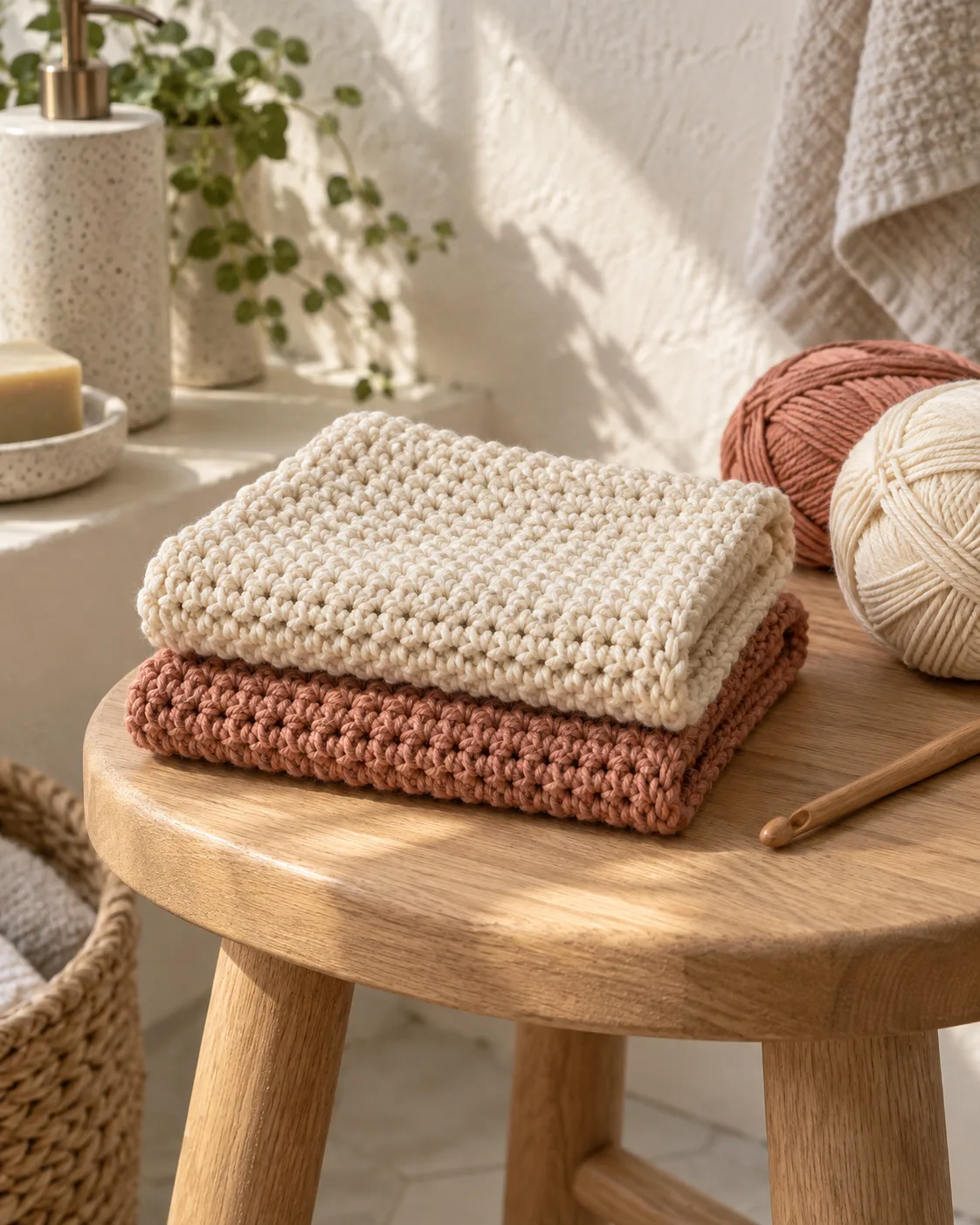
A simple handmade cloth gift
A small cotton cloth makes room for a thoughtful colour choice, a neat edge and a simple handmade finish. Start with one small goal, keep your tools close and give yourself room to become familiar with the rhythm of your stitches.
What makes this a useful place to begin?
Small home projects give you a clear, approachable place to practise. You can see the whole piece as it grows, pause to compare the edges, and notice the difference between a relaxed row and a tightly worked one. Progress does not need to be dramatic to be useful.
Gather a few simple tools
- A smooth yarn suitable for the project you choose.
- The hook size suggested by your pattern, with room to adjust after checking your fabric.
- A yarn needle, scissors and a few stitch markers.
- A tape measure and a quiet place to keep your project notes.
Use the complete material list and instructions from the pattern you decide to follow. Yarn labels give useful starting information, while the pattern explains what the designer intended for that specific project.
A calm way to approach your next make
- Read before starting. Look through the construction, terminology and finishing notes. Check whether the stitch names use US or UK terminology.
- Practise the unfamiliar. Work a small sample of a new stitch or join before committing it to the main piece.
- Keep track as you go. Count stitches at the end of a row and make a note of anything you want to check.
- Pause and compare. Set your work flat so you can see the shape, edges and texture clearly.
Keep these details in mind
| Look at | What to check |
|---|---|
| Yarn | Fibre, weight, texture and care instructions. |
| Fabric | How the stitches feel and how the piece falls. |
| Shape | Finished dimensions and the construction notes. |
| Finishing | Joins, loose ends and the pattern’s blocking guidance. |
Questions that come up along the way
Does every piece need to look perfect?
Practice pieces are useful because they show you what is happening. Keep one or two as a reference so you can compare your later work with where you began.
Where should I go next?
Choose one skill to build on. That might be a more consistent edge, a new colour change, or understanding a finished measurement. The beginner guide is a useful place to revisit the foundations.
A small, clear next step is often all you need to keep a handmade project moving.
Explore the project collections for more ideas, or send a note with a question about the journal.
This is a sample editorial article for the site preview, with illustrative imagery. It is a project introduction rather than a tested crochet pattern.